The things a production floor or a teaching lab needs once the machines are chosen — power overhead, surfaces to cut on, and somewhere to sit for eight hours.
Overhead power and lighting run down the length of a sewing line, so every station draws from above rather than from a floor socket. No trailing leads between operators, no extension boards underfoot, and a line that can be re-spaced without an electrician.
Lighting is integrated into the same run, which keeps the task light directly over the needle instead of somewhere behind the operator's shoulder.
Two things, related but not the same. Cutting tables are long, laminate-topped and built in matched runs so a lay can be spread across several without a step between them. Pattern tables are cork-topped, so you can pin straight into the surface.
Both sit on adjustable feet, because no studio floor is level.
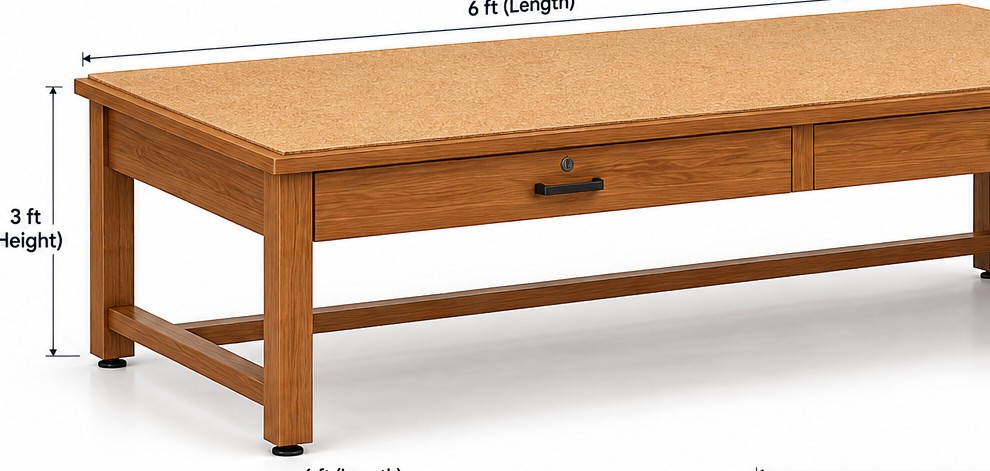
*Images are for reference only and may differ from the actual product. Specification, finish and configuration vary by series and by order.
Most cutting tables are laminate, which means every pattern gets weighted down with whatever is to hand and still shifts when you cut. A cork top takes a pin directly and closes up behind it, so the paper stays exactly where you put it.
| Top | Natural brown cork sheet, pinnable, over a timber substrate. |
|---|---|
| Dimensions | 6 ft long × 4 ft wide × 3 ft high. |
| Frame | Hardwood, cross-braced between the legs for rigidity. |
| Storage | Two drawers with locks, set into the long side. |
| Feet | Adjustable, for levelling on uneven studio floors. |
| Availability | Made to order. Other sizes on request. |
Cork is self-healing under a pin — the cells compress and spring back rather than tearing a permanent hole. Laminate can't be pinned at all; a softwood top takes a pin once and then carries the mark.
It's also quiet and slightly warm underhand over a long cutting session, and it doesn't bounce overhead light back into your eyes the way white laminate does.
Tables are usually ordered in matched runs so a room reads consistently and students at different benches work at the same height on the same surface. Tell us the room size and the number of students per session and we'll suggest a layout and count.
Operator seating to start with. More of the floor gets added here as we build it out.
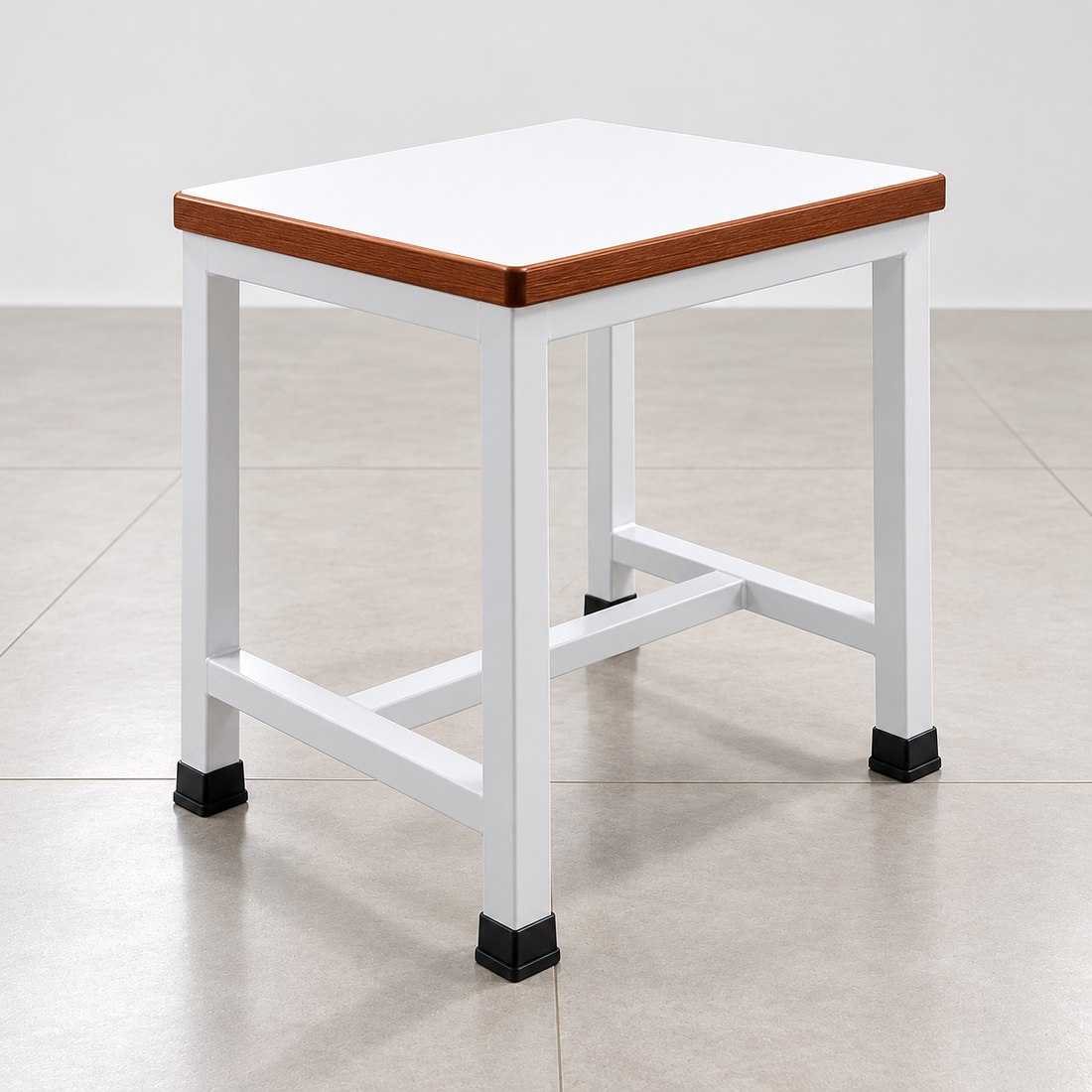
A welded steel frame with a cross-braced footrest and a laminate seat edged in timber. Built for a machine line where a stool takes a shift's worth of weight every day and gets dragged rather than lifted.
Capped feet so it doesn't score the floor.
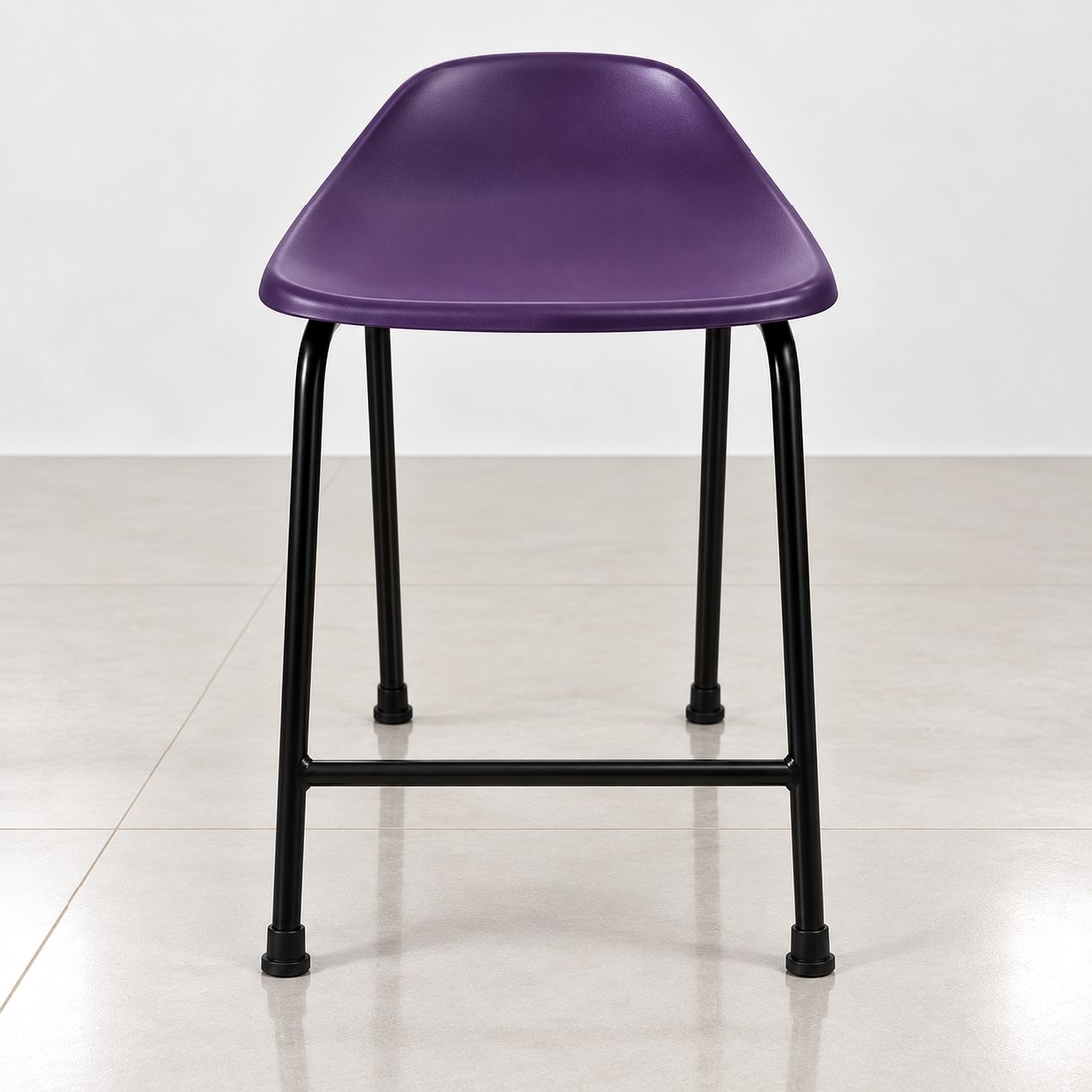
A moulded seat on a tubular steel frame, for stations where operators sit longer and want some shape under them. Lighter to move between benches, and available in a range of seat colours.
*Images are for reference only and may differ from the actual product. Specification, finish and configuration vary by series and by order.
Tell us the room, the number of stations and what you're making on it. We'll come back with a layout, pricing and lead time within one working day.
